Import from Jira
Role: Workspace admins
To import issue types from Jira, make sure the Issue types feature is enabled in your Plane workspace.
- Click the ∨ icon next to your workspace name on the sidebar and select Workspace Settings.
-
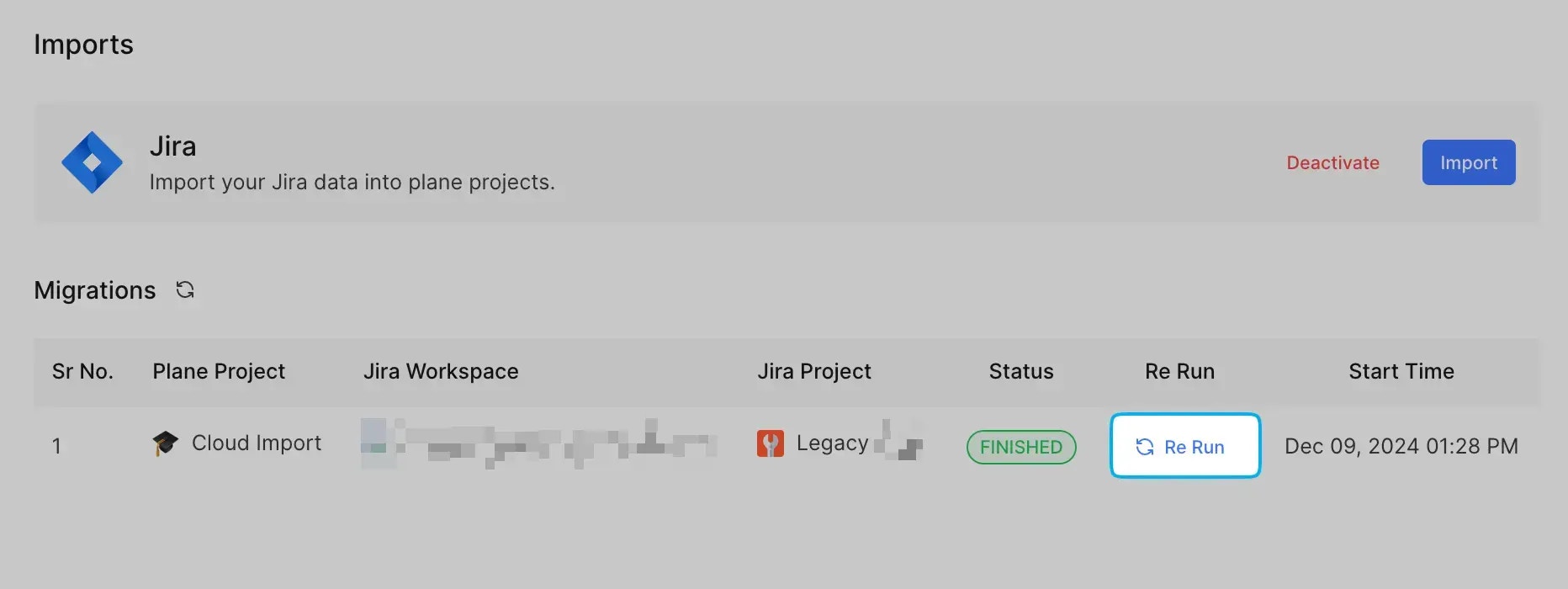
Select Imports on the right pane and click the Import button in the Jira section.

-
In the Jira to Plane Migration Assistant screen, enter your Personal Access Token, User email and the Jira domain to allow Plane access to your Atlassian account.

- Click the Connect Jira button to link the accounts.
-
Click the Import button.

-
Configure Plane Select the Plane project where you want to import your Jira data and and click Next.

-
Configure Jira Choose the workspace and project in Jira from where you want to import data.
 If you’re on a paid plan (Pro or higher), issue types in Jira will be imported as work item types in Plane. On the free plan, issue types from Jira won’t be imported.
 -
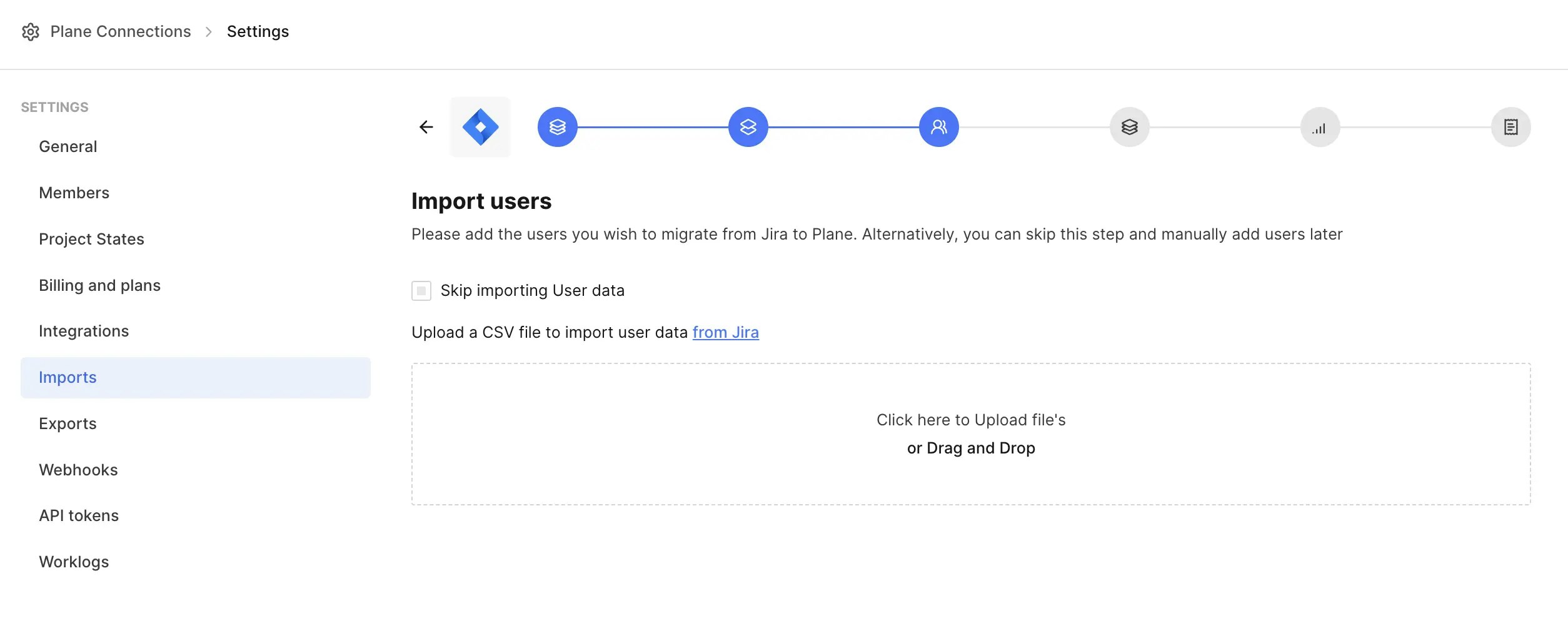
Import users Choose one of the following:
- Upload CSV Click the Upload CSV button to import users to your Plane project. Refer to Export users from a site to download the CSV file from Jira. (recommended)
- Skip user import You can select the Skip Importing User data checkbox and manually add users later.
-
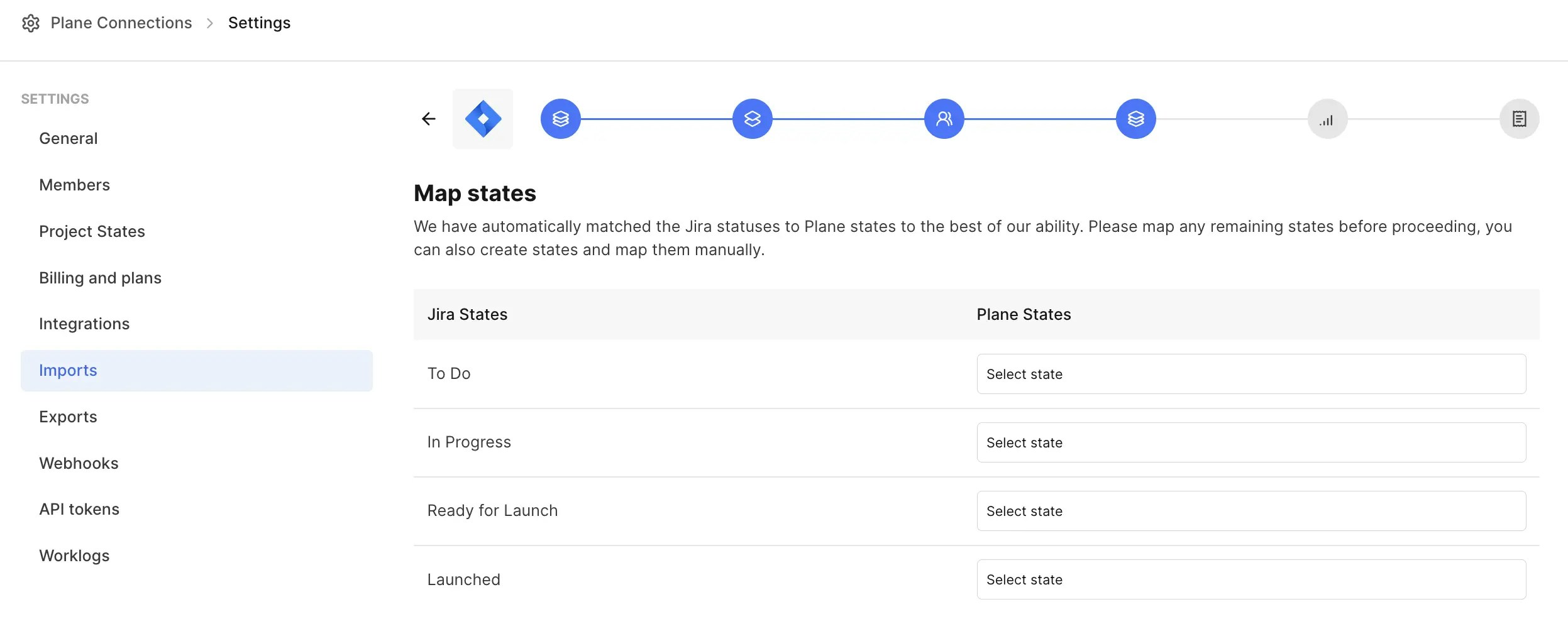
Map states
- Map Jira status to their equivalent Plane states.
- Select the Auto create and map the remaining Jira states checkbox to automatically create and map any missing states.
-
Map priorities Map the Jira priorities to the corresponding Plane priorities. If there’s no match, select None in the Plane priorities list.

-
Summary Review the mappings and make any changes if needed. Click Back to adjust, or click Confirm to start the migration.

-
The data migration begins and takes a few minutes to complete depending on the number of issues in your Jira workspace.

- Once it’s done, go to Work items in your Plane project to confirm that the data import is successful.
Imported entities
Here’s a quick look at what gets imported during the migration from Jira to Plane:Sync Jira to Plane
After the import, if there are any new or updated issues in Jira, you can easily sync these changes to Plane:- Go to Workspace settings.
- Select Imports on the right pane.
- Click the Re run button next to the project you want to sync.